

Trump rejects plan to assassinate Khamenei and prefers dealing with Iran diplomatically.
Arabian Sea - Exclusive
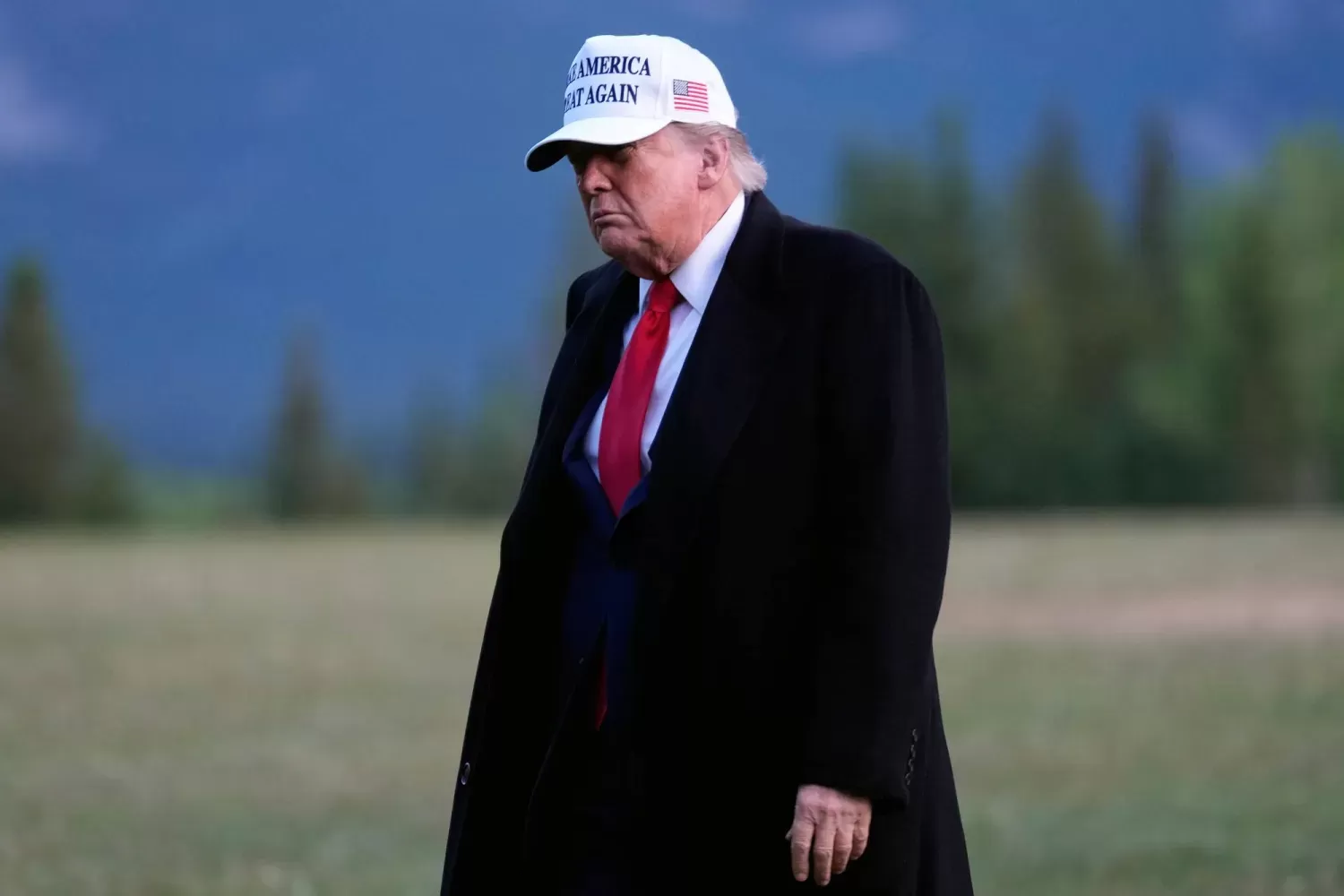
An American official revealed that President Donald Trump rejected an Israeli plan to assassinate Iranian Supreme Leader Ali Khamenei, amid a belief in Washington that diplomacy could still stop the escalation of the war that has been going on since Friday between Iran and Israel, and find a settlement for the Iranian nuclear and missile programs. While The New York Times considered that "war is diplomacy by other means," with the need not to rule out the possibility of resuming nuclear talks between the United States and Iran, the Associated Press quoted an American official who asked not to be named as saying that "the Israelis informed the Trump administration in recent days that they had developed a credible plan to assassinate Khamenei," adding that after reviewing the plan, "the White House made it clear to Israeli officials that Trump opposes the Israelis taking this step." The Trump administration is working to prevent Israeli military operations aimed at eliminating the Iranian nuclear program from causing a wider war, considering that the assassination of Khamenei is "a step that would ignite the conflict and destabilize the region." When asked by the American television network Fox News, Israeli Prime Minister Benjamin Netanyahu did not refer to the White House's rejection of the plan. But he said, "I think we are doing what we must do, and we will do what we must do. I think the United States knows what is good for the United States," adding that regime change "could certainly be a result" of the war "because the Iranian regime is very weak." Comprehensive Settlement Trump still seemed to be hoping for some kind of diplomatic settlement with the Iranian side, even though he continues to issue strong warnings to Tehran against targeting American interests in the Middle East, reiterating that the United States "has nothing to do with the attack on Iran." He wrote in a later post on his social media platform "Truth Social" that "Iran and Israel must sign a deal, and they will sign it soon," without clarifying the nature of the contacts he is making for this purpose. He hoped in separate statements that "there will be an agreement, and we will see what happens." He stressed that he would push Israel and Iran to stop hostilities "just as he pushed India and Pakistan to do so" after the recent border confrontation between the two countries. He also referred to the efforts made by his administration during his first term to mediate in the conflicts between Serbia and Kosovo, and between Egypt and Ethiopia. He wrote: "Similarly, we will soon have peace between Israel and Iran! Many contacts and meetings are now taking place. I do a lot, and I don't get any appreciation, but that's okay, the people understand that. Let's make the Middle East great again!" The Right to Enrichment Regional Affairs Trump Adheres to Diplomacy with Iran and Rejects Plan to Assassinate Khamenei, Warns Tehran Against Targeting American Interests US President Donald Trump arrives in Kananaskis, Canada, to participate in the G7 meetings of major industrial countries (AP) Washington: Ali Barada Published: 17:04 - June 16, 2025 AD - 20 Dhu al-Hijjah 1446 AH TT An American official revealed that President Donald Trump rejected an Israeli plan to assassinate Iranian Supreme Leader Ali Khamenei, amid a belief in Washington that diplomacy could still stop the escalation of the war that has been going on since Friday between Iran and Israel, and find a settlement for the Iranian nuclear and missile programs. While The New York Times considered that "war is diplomacy by other means," with the need not to rule out the possibility of resuming nuclear talks between the United States and Iran, the Associated Press quoted an American official who asked not to be named as saying that "the Israelis informed the Trump administration in recent days that they had developed a credible plan to assassinate Khamenei," adding that after reviewing the plan, "the White House made it clear to Israeli officials that Trump opposes the Israelis taking this step." The Trump administration is working to prevent Israeli military operations aimed at eliminating the Iranian nuclear program from causing a wider war, considering that the assassination of Khamenei is "a step that would ignite the conflict and destabilize the region." When asked by the American television network Fox News, Israeli Prime Minister Benjamin Netanyahu did not refer to the White House's rejection of the plan. But he said, "I think we are doing what we must do, and we will do what we must do. I think the United States knows what is good for the United States," adding that regime change "could certainly be a result" of the war "because the Iranian regime is very weak." Protesters raise pictures of Iranian Supreme Leader Ali Khamenei in Tehran (AFP) Comprehensive Settlement Trump still seemed to be hoping for some kind of diplomatic settlement with the Iranian side, even though he continues to issue strong warnings to Tehran against targeting American interests in the Middle East, reiterating that the United States "has nothing to do with the attack on Iran." He wrote in a later post on his social media platform "Truth Social" that "Iran and Israel must sign a deal, and they will sign it soon," without clarifying the nature of the contacts he is making for this purpose. He hoped in separate statements that "there will be an agreement, and we will see what happens." He stressed that he would push Israel and Iran to stop hostilities "just as he pushed India and Pakistan to do so" after the recent border confrontation between the two countries. He also referred to the efforts made by his administration during his first term to mediate in the conflicts between Serbia and Kosovo, and between Egypt and Ethiopia. He wrote: "Similarly, we will soon have peace between Israel and Iran! Many contacts and meetings are now taking place. I do a lot, and I don't get any appreciation, but that's okay, the people understand that. Let's make the Middle East great again!" The Right to Enrichment Israeli Prime Minister Benjamin Netanyahu speaks with a military leader during a meeting in which preemptive strikes against Iran were decided Various American estimates indicate that Israel is unlikely to achieve the goal of destroying the Iranian nuclear program without American intervention, which Trump has resisted so far, as he continues to affirm his desire to make the negotiations a success, but he believes that an Israeli attack will bring Iran back to the negotiating table in a weaker and more conciliatory position, and ready to accept his demand to stop all uranium enrichment activities on Iranian soil. However, Iran insists on its right to enrichment for civilian uses under the Nuclear Non-Proliferation Treaty. Trump also seems to see war as a form of diplomacy, based on what he wrote on Friday: "Two months ago, Iran was given 60 days to reach an agreement. They had to do it! Today is the sixty-first day. I told them what they had to do, but they couldn't do it. Now, maybe they have a second chance!" Trump said this while negotiations are still stalled amid a war expected to last for days or even weeks. He was met from Tehran with similar statements from Iranian officials confirming that they are still looking forward to an agreement. Iranian Foreign Minister Abbas Araqchi told diplomats in Tehran: "We are ready for any agreement that aims to ensure that Iran does not seek to possess nuclear weapons." But he added that his country will not accept any agreement "that deprives Iran of its nuclear rights," including its right to enrich uranium, even if at low levels that can be used for civilian purposes. He considered that Israel did not attack to prevent Iran from seeking to possess a nuclear bomb, but to obstruct negotiations on an agreement that Netanyahu opposes. He considered the attacks "an attempt to undermine diplomacy and obstruct negotiations," a view shared by a number of Western analysts. He said: "It is quite clear that the Israeli regime does not want any agreement on the nuclear issue. It does not want negotiations, and it does not seek diplomacy." Turning Point The attacks launched by Israel, despite scheduling a sixth round of talks, have undermined Iran's efforts to obtain a nuclear weapon, according to Netanyahu's claims, knowing that American and European estimates indicate that Iran is still several months away from building a nuclear bomb, and that it has not decided to do so anyway. The war led to the cancellation of the sixth round, which was scheduled for last Sunday in Muscat. It is believed that Netanyahu believed that an American-Iranian agreement would prevent him from achieving his goal of destroying the Iranian nuclear program, and perhaps overthrowing the Iranian regime. Trump faces a division in his coalition over how far he should go in supporting Israel. Republican Representative Marjorie Taylor Greene, Turning Point USA founder Charlie Kirk, and talk show host Tucker Carlson are among the most prominent Trump supporters who have argued that voters supported Trump because he would not involve the country in foreign wars. Republican Senator Rand Paul praised Trump for his restraint. In an interview on CBS, Republican Senator Lindsey Graham said he prefers diplomatic efforts, but if diplomacy fails, Trump should "devote all his efforts" to destroying the Iranian nuclear program.