

Former British officer reveals to an inquiry committee suspicions of war crimes committed by special forces in Afghanistan.
Arab Sea Newspaper - Follow-ups:
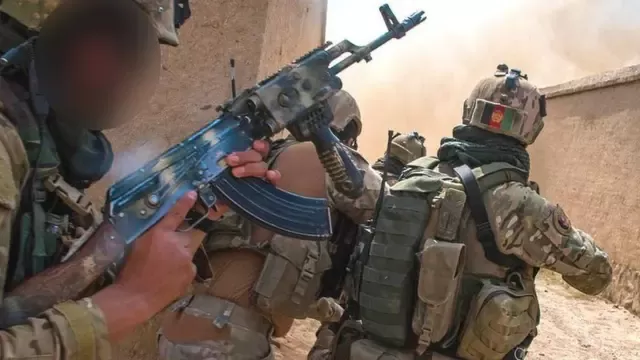
A former senior British officer told a public inquiry that British special forces in Afghanistan likely committed war crimes by summarily executing suspects, asserting that the chain of command was aware of this but took no action. The inquiry was ordered by the British Ministry of Defence following a BBC documentary that revealed that members of the Special Air Service killed 54 people in suspicious circumstances during the war in Afghanistan more than a decade ago. The investigation concerns night raids carried out by British forces between mid-2010 and mid-2013 as part of the US-led coalition to fight the Taliban and other armed factions. Military police had conducted several investigations into violations attributed to British forces—including special forces—but the Ministry of Defence said the evidence was insufficient to bring anyone to trial. The investigation is examining whether there was credible information about extrajudicial killings, the integrity of subsequent investigations, and whether there was a possible cover-up of these violations. The head of the inquiry, Judge Charles Haddon-Cave, said it was essential to bring anyone who broke the law to justice, while vindicating those who did nothing wrong. The committee had previously heard testimony that a special forces sub-unit known as "UKSF1" was killing fighting-age men during operations, regardless of the level of threat they posed. In new testimony revealed today, an officer referred to as "N.1466"—who served as Assistant Chief of Staff for Operations at Special Forces Headquarters in 2011—explained that the number of detainees killed raised his suspicions, especially since the death toll exceeded the number of weapons seized, and that accounts of repeated attempts by detainees to obtain a weapon or throw grenades after being captured seemed illogical. The officer told the lead counsel in the inquiry, Oliver Glasgow: "To be clear, we are talking about war crimes... about returning detainees to their locations and then executing them under the pretext that they tried to resist the forces." He added that he informed the Director of Special Forces – known as 1802 – but he only issued an order to review operational tactics instead of opening a criminal investigation. The officer expressed regret for not contacting the military police directly at the time, although he later filed a report in 2015, stressing that he was deeply concerned about what he believed were unlawful killings of innocent people, including children. In his testimony, he stated that he now believes that extrajudicial killings were not limited to a few individuals from UKSF1, but may have been more widespread and widely known within the Special Forces. Other testimonies presented by former officers and an official in the Ministry of Defence showed the frustration felt by soldiers over the release of detainees days after their arrest, due to the Afghan judicial system's inability to handle the cases. The inquiry also heard information about intense competition between two special forces units to which Officer N.1466 belonged. The officer concluded his testimony by saying: "I realize that some will try to portray me as anti-Special Forces or as someone with personal motives, and this is not true at all... We did not join these forces to engage in such behavior, such as shooting children in their beds or indiscriminate killing. This is not what we represent, and it is not what should be condoned." The investigation is ongoing.