

Tehran: Iran is losing its grip on the Houthis
Arab Sea Newspaper - Yemen Future:
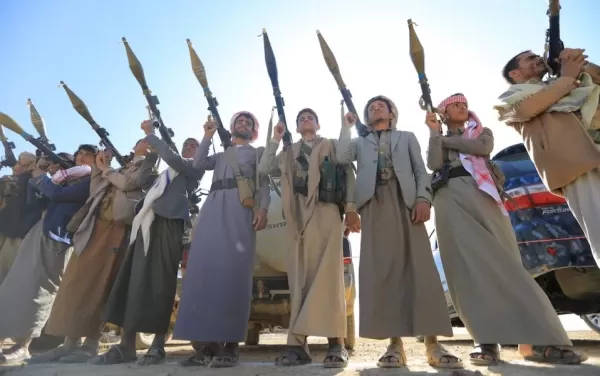
Iranian sources confirm that Tehran has lost control of the Houthi group in Yemen and is struggling to maintain what remains of the "axis of resistance" forces throughout the Middle East. According to officials, the rebels in Yemen, who regularly attack international shipping lanes, have stopped taking orders from Tehran. A senior Iranian official told The Telegraph from Tehran: "The Houthis have been out of control for some time and have already become rebels. They no longer listen to Tehran's directives as they used to." The official added: "It's not just the Houthis; some groups in Iraq are also acting as if we have no connection to them." The Houthis represent Iran's last prominent proxies in the region, after Israel destroyed Hezbollah's top leadership and the remnants of Hamas were isolated by the siege of Gaza. A senior commander in the Iranian Revolutionary Guard arrived in the Yemeni capital, Sanaa, last week in an attempt to bring the Houthi group back under Iranian control, The Telegraph reported. This comes as part of a plan by the Revolutionary Guard to calm the rebels and rebuild the "axis of resistance" around them by increasing support for the Houthis after a period of calm that lasted several months. After the war with Israel, Iranian officials have become increasingly reliant on their remaining assets in the region, including select militia groups in Iraq and the Houthi group in Yemen. For decades, clerics in Tehran have waged massive propaganda and military campaigns portraying Iran as the main protector of the Palestinian cause. But they did not participate in the ceasefire talks in Gaza in Sharm el-Sheikh, because Iranian officials admitted that "they know they have lost the game." Regarding the Iraqi militias, an Iranian official said: "They have been instructed several times not to conduct any exercises for a while until things calm down, but they are not listening either." The crisis with Iran's proxies represents a fundamental shift in the regime's regional position, forcing Tehran to confront the collapse of a four-decade strategy that relied on exerting influence through proxy forces rather than direct military engagement. In Yemen, the Houthis have withstood years of strikes and have become adept at hiding their military equipment. They have also expanded their alliances and supply lines in an attempt to gradually move away from reliance on Iranian support in recent months. Mahmoud Shahra, a former Yemeni diplomat, told The Telegraph: "The Houthis don't need anyone to encourage them. It's related to their beliefs, and they have their own literature and narratives." He added: "But we do not ignore the coordination with Iran, the support, the smuggling operations, and the transfer of technology from Iran to Sanaa. And the Houthis already have their own motives for escalation." Disagreements between the Houthis and Iran date back to April, when Tehran failed to provide them with support during intense US strikes for fear of slipping into a direct conflict with Washington. However, since the October 7, 2023 attacks led by Hamas on Israel, the group has improved its tactics and missile capabilities and built a strong public image. The group controls Sanaa, prints money, collects taxes, diverts aid, smuggles drugs, sells weapons to terrorist groups in Africa, and disrupts international shipping lanes in the Red Sea. They also have a geographical advantage; the mountainous terrain of Yemen, similar to Afghanistan, helps them hide missile and drone stockpiles in caves and underground bunkers. The Iranian Revolutionary Guard sent a senior commander to Yemen last week to address what Yemeni opposition media describe as a leadership crisis within the Houthi ranks. Abdul Reza Shahlai, a commander in the Quds Force, the elite unit of the Iranian Revolutionary Guard, returned to Sanaa after being previously summoned to Iran. The Yemeni military affairs publication Defense Line said in a recent report: "The Houthis are currently facing a crisis of choices and priorities, pressing internal challenges, and a complex regional landscape." The report added that Iranian Revolutionary Guard personnel and experts supporting the Houthis "do not compensate for this strategic vacuum" and constitute "in essence an extension and reflection of the existing confusion in Tehran." Abdul Reza Shahlai is one of the most enigmatic commanders of the Iranian Revolutionary Guard, and the United States has set a reward of $15 million (£11.4 million) for any information about his network and activities. The Iranian official who spoke to The Telegraph said that one of Shahlai's plans was to urge the Houthis to "cooperate more than before, as they are the only remaining active group." Despite the US-led air strike campaign, which former President Trump claimed had "destroyed" the Houthis, experts considered it less effective than the president may have boasted. The cost of the two-year air strike campaign under former US President Joe Biden, and then Trump, is estimated at at least $7 billion. The Houthis had already withstood years of air strikes by Saudi-led coalition forces and had become accustomed to hiding their weapons to carry out quick hit-and-run strikes. Dr. Bader Al-Saif of Kuwait University said that cooperation benefits both Iran and the Houthis. He added: "There is a benefit for both Iran and the Houthis to work together, and that has been the case. But I think they also have divergent interests, and they will pursue their interests when they see fit, whether in the case of Iran or the Houthis. It can be likened to a kind of franchise." To read the article from its original site: https://www.telegraph.co.uk/world-news/2025/11/25/iran-houthis-yemen-revolutionary-guard-corps/