
Developments in the arrest of the agent "Yan. F."... France expels Malian diplomats.
Arabian Sea Newspaper - Special
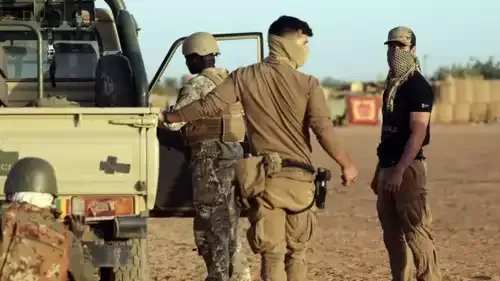
Arab Gulf - Follow-ups: France has given the expelled Malian diplomats a final deadline to leave the country, in the latest chapter of tension between Bamako and Paris. France accuses the African country of violating the Vienna Convention and is moving to pressure the Assimi Goïta regime through the visa file. A month after the arrest of a French intelligence agent in Bamako, Paris decided to expel Malian diplomats and suspend security cooperation, as part of a "firm" strategy that may backfire. The agent "Yan. F" This is a new stage in the diplomatic crisis between the two countries, after what happened on August 14, when "Yan. F", an agent of the "French intelligence service", was arrested on charges of "attempting to destabilize". The latter is an intelligence officer in the Directorate-General for External Security, assigned to the French Embassy in Mali, and officially accredited by the Malian authorities. He was working specifically within the framework of security cooperation despite the departure of French forces at the end of Operation Barkhane, a military mission that failed strategically over ten years. On the same day, ten Malian officers, including two generals, Nema Sagara and Abbas Dembele, and a number of other soldiers were arrested for the same reason, which is attempting to destabilize the country. Therefore, Paris decided to respond by declaring two people persona non grata, and they were given until September 20 to leave the country. The Malian authorities, led by General Assimi Goïta, who has been in power since the August 2020 coup, ordered five other French diplomats, who were also working at the French Embassy in Bamako, to leave the country, knowing that these people had already left Mali on September 14. For thirty-seven days, the Ministry of Foreign Affairs and the French Embassy have been negotiating with the Malian authorities to release their agent, who enjoys diplomatic immunity regulated by the 1961 Vienna Convention, which Mali ratified in 1968. In what Paris considers a violation of the international legal texts binding on the Malian side, the French diplomat was not allowed to receive a consular visit to check on his health in his place of detention, where he is being interrogated by state security officers. A French diplomatic source denies "violation of his rights by the Malian authorities or that he was subjected to ill-treatment", attributing the current failure of negotiations to the Malians' refusal to consider the international treaties signed by Bamako, in reference to the Vienna Convention. The deterioration of relations between the two countries is not new, but unlike its neighbor and ally, Burkina Faso, which is witnessing a clear break with the cessation of trade exchange, security cooperation with Mali, which, like the Sahel countries, is engaged in a war against armed groups, especially the Support Group for Islam and Muslims and the "ISIS" organization, has continued. Although this cooperation is secret, it is currently suspended and limited to providing intelligence and technical assistance, while Mali has turned to Russia for assistance in its war against extremist groups. The Directorate-General for External Security, of which "Yan F" was the declared representative to the authorities in Bamako, continued to transmit detailed information to Malian state security about the movements of extremist groups that are gradually besieging the capital. For the first time last week, the Support Group for Islam imposed a blockade on roads in southern and western Mali, preventing the flow of goods from the ports of neighboring coastal countries to this landlocked country. It is feared that the "firmness" option, as it is called in diplomatic terms, will not bear fruit in light of the threat of further sanctions against Bamako, as many other crises that preceded it show that results are rarely achieved except through negotiation. With the continued deterioration of diplomatic relations since the expulsion of the French ambassador in February 2022, Paris may resort to another means, which is the visa file, according to informed Malian sources. Before the crisis, the French Embassy issued about 120 visas per day to Malians wishing to travel to France, then this number dropped to zero. Recently, the French Ministry of Foreign Affairs cautiously eased its policy and allowed the issuance of about twenty visas per day. This is a decision that Paris can reverse, or even escalate by imposing a ban on the entry of Malian officials. Meanwhile, the colonels in Bamako, after the widespread purge carried out within the army in August, are facing increasing criticism from the population due to the failure to confront the advance of extremist attacks on Malian territory and the absence of national honors for the soldiers who "fell in the field of honor".