


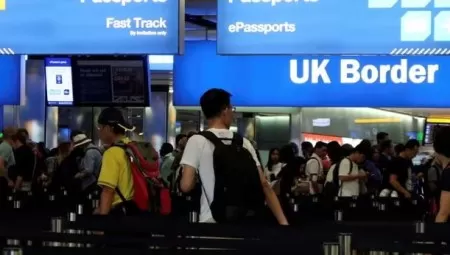
Britain closes the door on refugees: decisive decisions spark concern and humanitarian fears.
Britain closes the door on refugees: decisive decisions spark concern and humanitarian fears.
Arabian Sea - Special
In a radical shift in immigration policies, the United Kingdom has implemented a series of strict measures targeting asylum seekers, sparking a wave of criticism and concern from human rights organizations. As the new Labour government seeks to exert greater control over the country's borders, thousands of refugees, including Syrians, face an uncertain future. Key Developments: * Automatic denial of citizenship for irregular refugees: The British Home Office announced its refusal to automatically grant citizenship to anyone who entered the country illegally. The decision will be applied retroactively to files currently under processing, potentially affecting thousands of people. * Cancellation of the refugee relocation plan to Rwanda: After years of debate, the government officially halted the Rwanda agreement, which cost the state treasury over £700 million without any actual deportations taking place. * Talks to establish "return centers" outside Britain: London is considering establishing temporary detention centers in Balkan countries for rejected asylum seekers, despite Albania's refusal to participate in the project. Syrian Refugees: Between Waiting and Uncertainty Thousands of Syrians are experiencing anxiety following the government's announcement of a suspension of consideration of their asylum applications since December 2024, due to "geopolitical changes in Syria" following the collapse of the Assad regime. The government has not clarified its position on granting humanitarian protection to these individuals, merely issuing statements about "assessing the situation on the ground." Analysis by Al-Bahr Al-Arabi: Security Policy or Evasion of Responsibility? Al-Bahr Al-Arabi newspaper believes that Britain is moving towards a purely security-based approach to the refugee issue, ignoring the ethical and humanitarian commitments enshrined in the 1951 Refugee Convention. Notably, most of those affected are vulnerable individuals who have fled war or persecution. The creation of "external centers" or the freezing of Syrian files does not address the root of the problem but rather reproduces it in a different form, threatening to create a new class of stateless persons or those trapped in administrative and legal oblivion. Conclusion Caught between the hammer of domestic policies and the anvil of international responsibility, the asylum file in Britain seems to be heading towards further complexity. With the absence of a comprehensive humanitarian strategy, the country may find itself facing not only human rights organizations but also its own moral conscience.